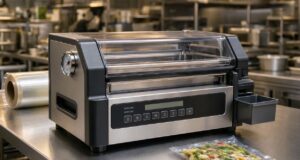
When standard commercial sealers reach their limits—whether due to continuous 16-hour shifts, oversized packaging, or abrasive industrial materials—heavy-duty vacuum sealers step in. Designed for high-volume processors, meat packing plants, and large-scale commercial kitchens, these industrial workhorses focus on durability, maximum pump draw, and rapid cycle times.
Unlike light-duty tabletop models, a heavy-duty system is engineered to handle non-stop operation without thermal shutdown, providing airtight seal integrity across thousands of cycles per day.
Disclosure: As an Amazon Associate I earn from qualifying purchases. Read our Amazon Affiliate Disclosure for more information.
1. Key Features That Define Heavy-Duty Vacuum Sealers
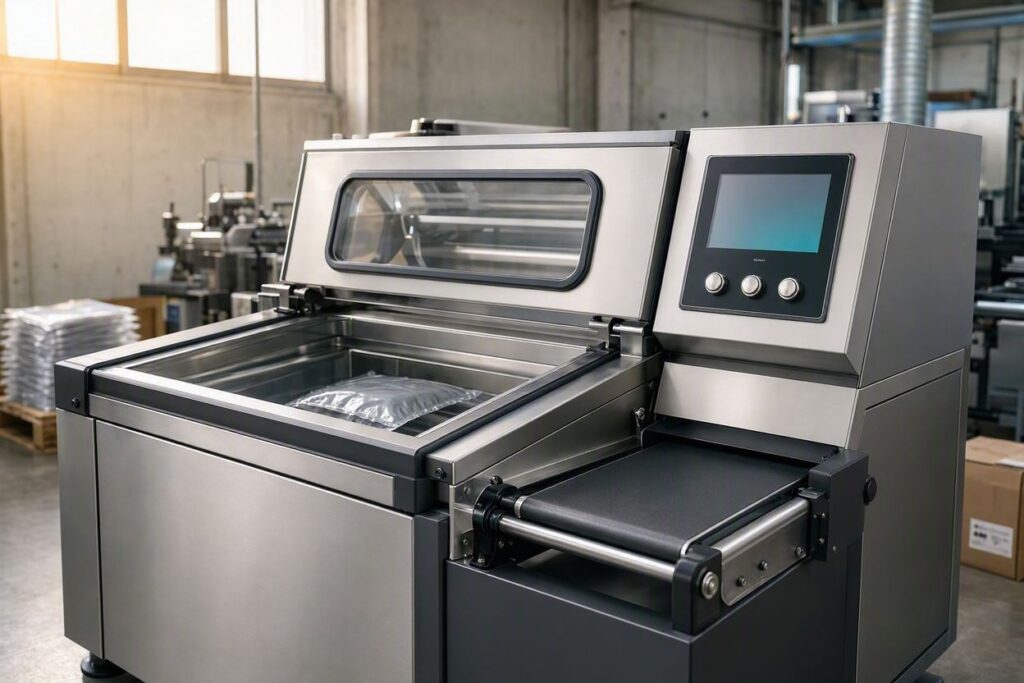
Understanding the internal construction of a heavy-duty machine ensures you select hardware capable of enduring demanding production environments.
+--------------------------+----------------------------------+------------------------------------+
| Component                | Heavy-Duty Industrial Sealer     | Standard Commercial Sealer         |
+--------------------------+----------------------------------+------------------------------------+
| Duty Cycle               | Continuous (100% duty cycle)     | Intermittent (Requires cool-downs) |
| Pump Type                | High-CFM Busch/Oil-rotary pump   | Small oil-rotary or dry diaphragm  |
| Construction             | 304 Stainless steel / Heavy metal| Lightweight steel or hard plastic  |
| Seal Bar Length & Width  | Extended lengths (20"+), 5-10mm  | Standard lengths (10"-16"), 3-4mm  |
| Bag Compatibility        | Heavy mil, foil, mylar, gusseted | Standard 3-mil nylon/poly pouches  |
+--------------------------+----------------------------------+------------------------------------+
High-Capacity Busch & Heavy-Duty Rotary Vane Pumps
The heart of any industrial vacuum system is its pump. Heavy-duty units utilize high-capacity oil-rotary vane pumps (frequently industry-standard Busch pumps) rated at high CFM (cubic feet per minute). This allows the machine to pull deep vacuum levels (up to 99.9% or 1-2 mbar) in seconds, drastically reducing cycle times per load.
Reinforced Thermal Seal Bars
Heavy-duty sealers feature wider seal wires (5mm to 10mm) or double-seal setups that fuse thick materials, including 6-mil to 8-mil heavy-duty pouches, aluminium foil laminates, and gusseted barrier bags. High-voltage transformers deliver rapid heat pulses that melt dense plastics instantly without degrading the seal wire over time.
2. Types of Heavy-Duty Vacuum Sealing Equipment
Heavy-duty sealers are categorized by their physical architecture and operational mechanics.
                  +-----------------------------------+
                  |  Heavy-Duty Vacuum Sealer Systems |
                  +-----------------+-----------------+
                                    |
         +--------------------------+--------------------------+
         |                                                     |
         v                                                     v
+-------------------------------+             +-------------------------------+
|     Double-Chamber Sealers    |             | Heavy-Duty Nozzle/Impulse     |
| - Continuous dual-bed operation|             | - Handles oversized/bulk bags |
| - High-throughput processing  |             | - Vertical & horizontal mounts|
| - Ideal for meats & bulk food |             | - Gas purge (MAP) compatible  |
+-------------------------------+             +-------------------------------+
A. Double-Chamber Vacuum Sealers
Double-chamber machines feature two distinct sealing beds with a single, heavy-duty swinging lid. While one chamber completes its vacuum and sealing cycle, the operator loads the second chamber.
- Best for: High-yield meat processing plants, wholesale portioning, and large-scale food distribution.
- Throughput Advantage: Eliminates load-time downtime, practically doubling hourly output compared to single-chamber units.
B. Heavy-Duty Industrial Nozzle (Snorkel) Sealers
For products too large to fit inside a traditional chamber box—such as 50-pound bulk ingredient bags, electronic components, or large hardware items—heavy-duty nozzle sealers extend a retractable stainless-steel probe into the bag mouth to evacuate air externally.
- Best for: Bulk chemical powders, medical devices, bulk agriculture, and oversized industrial goods.
- Key Advantage: Unrestricted package dimensions combined with pneumatically powered jaw closure for massive clamping pressure.
3. Practical Applications Across Industries
While primary adoption occurs in food production, heavy-duty sealers serve critical roles across multiple commercial sectors:
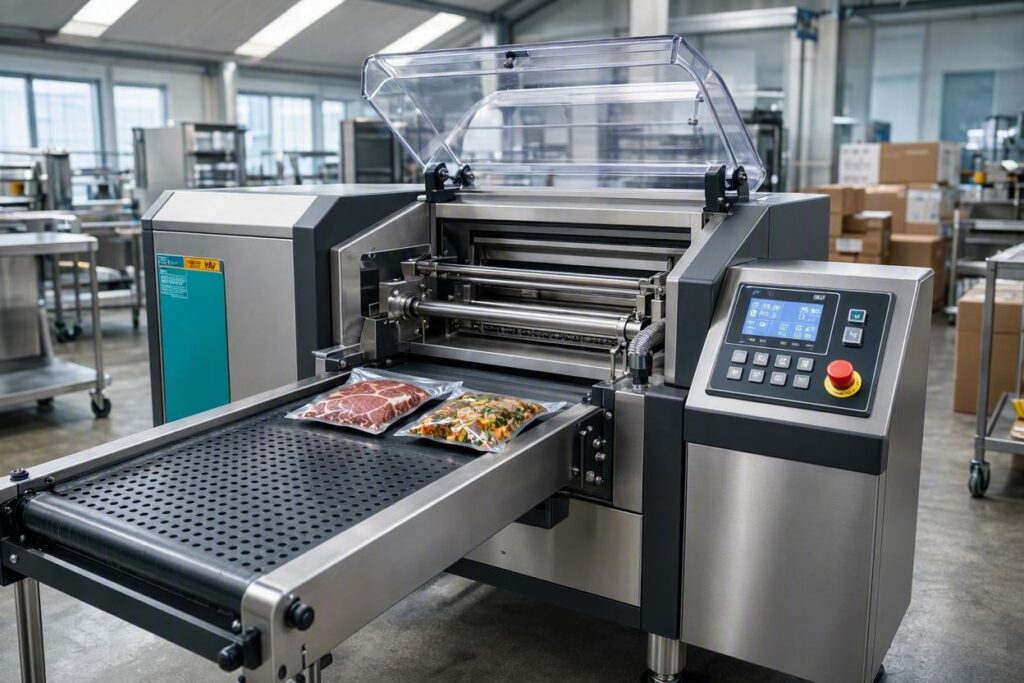
- Meat & Poultry Processing: Packaging primal cuts, whole birds, and processed meats for extended cold storage or export without risking puncture or moisture loss.
- Prepared Foods & Sous-Vide Batching: Sealing large batches of soups, sauces, and stews in heavy-gauge pouches for high-volume sous-vide cooking and rapid chilling.
- Medical & Pharmaceutical: Airtight containment of sterile instruments, pharmaceuticals, and sensitive medical items away from humidity and ambient air contamination.
- Electronics & Industrial Hardware: Protecting circuit boards and precision machinery components from static discharge, oxidation, and dust during transport.
4. Maintenance Best Practices for Peak Performance
To keep an industrial-grade sealer operating reliably, maintenance must be integrated into daily operations.
- Schedule Daily Oil Checks: Verify oil clarity and fluid levels in the pump sight glass daily. Cloudiness or milkiness indicates moisture accumulation that reduces vacuum performance and accelerates internal pump wear.
- Inspect Seal Jaws and Silicone Strips: Daily cleaning prevents product buildup on the sealing surfaces. Replace burned Teflon tape promptly to avoid burning bags or warping the heating wires.
- Filter Element Replacement: Exhaust filters inside high-CFM oil pumps prevent oil mist from venting into your facility. Change these filters along with periodic pump oil services to maintain vacuum efficiency and workplace air quality.
- Pneumatic Line Checks: For pneumatically actuated seal jaws and lids, ensure incoming compressed air is clean, dry, and regulated to manufacturer-specified pressure levels.
A heavy-duty vacuum sealer is a long-term infrastructure investment designed to streamline throughput, protect valuable product, and eliminate storage loss under high-demand conditions. Choosing between double-chamber systems or heavy-duty industrial nozzle sealers ultimately comes down to your production volume, package sizing, and materials.
Content Disclaimer: Content on Vacuum Seal HQ is provided for general informational and educational purposes only. While we aim to provide accurate and up-to-date information, errors or omissions may occur. Always check product instructions, manufacturer guidance and other appropriate sources before relying on the information provided.