A good vacuum sealer can change the way you handle food packaging.
If you run a restaurant, butcher shop, catering service, meal-prep business, or small food-production operation, you probably deal with bags and packaging on a regular basis. Doing everything by hand takes time. It can also make it harder to keep package sizes and seals consistent.
That is where the best professional vacuum sealer can earn its place in your workspace.
Disclosure: As an Amazon Associate I earn from qualifying purchases. Read our Amazon Affiliate Disclosure for more information.
But choosing one takes a little thought.
You should not buy a machine just because the seller calls it professional. You need to look at the machine’s actual size, vacuum system, sealing bar, cycle time, bag compatibility, controls, maintenance needs, and workload rating.
A machine that works perfectly for one business may not work well for another.
The following guide takes you through the process step by step.
1. Understand What You Need the Sealer to Do
Start with your products.
Make a list of the foods or other suitable items you plan to vacuum seal.
You may work with:
- Meat
- Fish
- Cheese
- Vegetables
- Prepared meals
- Ingredients
- Dry foods
- Frozen products
- Sauces
- Marinades
Now think about the size and shape of those products.
Do you mostly package small portions?
Do you handle large cuts of meat?
Do you use wide bags?
Do some products contain liquid?
These answers will help you choose the right machine.

2. Calculate Your Daily Packaging Volume
Next, count your average number of packages.
This is one of the most important things to consider.
A business that seals 20 bags a day has very different requirements from one that seals 300.
Look at both your average and busiest days.
Then check the manufacturer’s recommended duty cycle.
Do not assume that a machine can run nonstop simply because its product listing says “professional.”
A busy business needs equipment designed for the amount of work it actually performs.
3. Decide Between External and Chamber Vacuum Sealers
You will usually come across two main designs.
External Vacuum Sealer
An external machine keeps most of the bag outside the unit.
It removes air through the open end and then seals the bag.
This design can work well for smaller operations and suitable dry products.
It also tends to require less workspace.
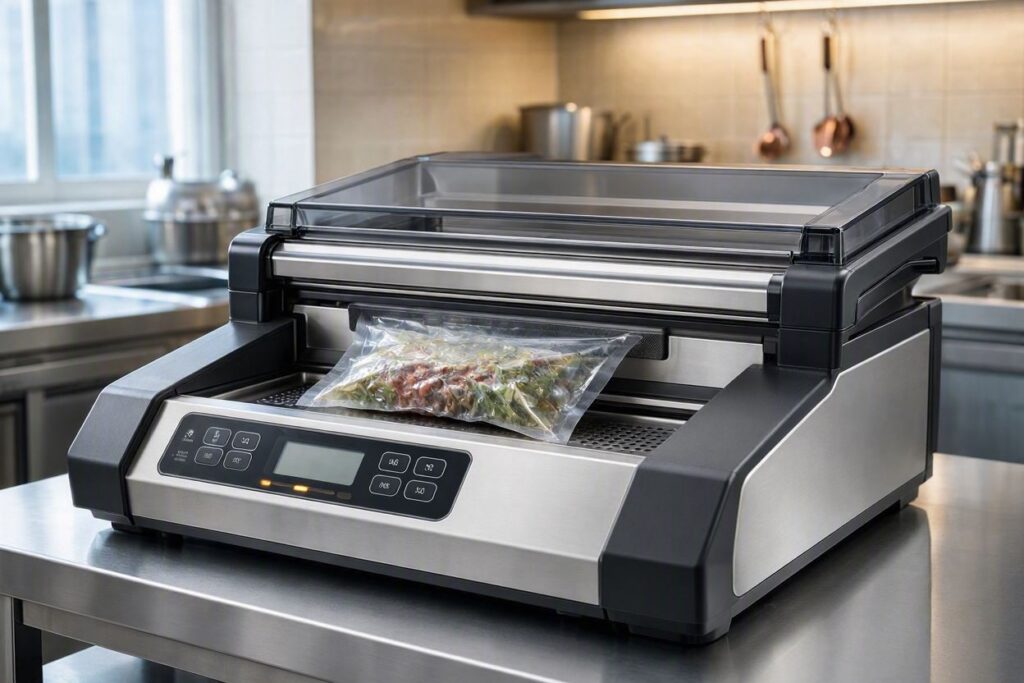
Chamber Vacuum Sealer
A chamber model places the complete bag inside the chamber.
The machine removes air from the chamber and bag before sealing.
This design works well for many commercial food applications.
It can also suit certain liquid-containing products when you follow the manufacturer’s instructions.
For many professional food businesses, chamber machines offer greater flexibility.
4. Measure Your Products First
Before buying, measure your largest regular product.
Do not measure only the average package.
Think about the biggest item you will need to seal.
Then measure the bag you plan to use.
For a chamber machine, compare your measurements with the internal chamber dimensions.
Look at:
- Chamber width
- Chamber length
- Chamber height
- Seal-bar length
- Maximum bag size
The machine’s outside dimensions do not tell you how much usable space you have inside.
5. Check the Sealing Bar
The sealing bar creates the final closure on the bag.
Its length affects the maximum practical bag width.
If your business uses large bags, look for a suitable seal-bar length.
If you mainly use small bags, you may not need a wide sealing bar.
Choose based on your actual packaging.
6. Look at the Vacuum Pump
The pump controls how the machine removes air.
Check the manufacturer’s specifications.
Look for information about:
- Pump type
- Pump capacity
- Vacuum level
- Cycle time
- Duty cycle
- Maintenance requirements
Avoid choosing based on vague claims such as “ultra powerful.”
Numbers and specifications tell you much more.
A machine with a larger pump does not automatically work faster in every situation. Chamber size, bag size, settings, and overall machine design also affect cycle performance.
7. Understand Pump Maintenance
Different machines can use different pump designs.
Oil-lubricated pumps can suit demanding commercial applications, but they need proper oil maintenance.
Dry pumps avoid pump-oil maintenance, which can make routine care simpler.
Think about how often you plan to use the machine.
A busy business should consider long-term maintenance requirements before purchasing.
Follow the manufacturer’s maintenance instructions instead of guessing when a pump needs service.
8. Choose the Right Bags
Your machine and bags need to work together.
Check which packaging materials the manufacturer recommends.
Look at:
- Material
- Thickness
- Width
- Length
- Seal requirements
- Intended application
External suction machines often need textured or embossed vacuum bags.
Chamber machines commonly use smooth vacuum pouches.
Confirm compatibility before buying bags in bulk.
9. Consider Bag Costs
Do not stop at the price of the machine.
Think about how much you will spend on bags every month.
For a high-volume operation, packaging material can become a significant ongoing expense.
Calculate the approximate cost per package.
Then estimate your monthly usage.
A machine that costs less upfront may not always have the lowest long-term operating cost.
10. Check the Workspace
Measure your counter or floor space.
Then compare it with the machine dimensions.
Remember that the machine needs room around it.
Employees need space to load products, remove packages, clean the machine, and move safely around the work area.
A large floor model may work well in a production facility.
A compact chamber model may make more sense in a restaurant kitchen.
11. Check Electrical Requirements
Look at the machine’s electrical specifications before purchasing.
Confirm the required voltage and power.
Make sure your workplace has a suitable electrical supply.
If you are uncertain, contact the manufacturer or a qualified professional before installation.
Do not guess.
12. Think About Wet and Dry Foods
The type of food can influence your machine choice.
Dry foods generally create fewer problems during vacuum sealing.
Wet foods need more attention.
Products such as:
- Sauces
- Marinades
- Juicy meat
- Soups
- Other liquid-containing foods
can behave differently during the vacuum process.
Chamber vacuum sealers can offer advantages for many wet-food applications because the machine creates the vacuum around the chamber and bag together.
Always follow the manufacturer’s instructions for liquid products.
13. Prepare the Product Properly
Good preparation makes vacuum sealing easier.
Remove unnecessary packaging.
Trim sharp edges where appropriate.
Watch for bones, shells, or other hard objects that could puncture the bag.
Keep the product clean.
For perishable foods, maintain proper temperature control throughout preparation and packaging.
14. Fill the Bag Correctly
Place the product into the correct bag.
Do not overfill it.
Leave enough space at the opening.
Keep the sealing area clean.
Avoid getting food, grease, oil, or sauce near the opening.
A clean sealing area gives you a better chance of getting a consistent seal.
15. Position the Bag
Follow the machine’s instructions when placing the bag.
For a chamber model, position the bag opening correctly around the sealing bar.
Smooth out large wrinkles.
Keep the opening flat.
Make sure the product does not interfere with the lid.
A few seconds of careful positioning can prevent many problems.
16. Set the Vacuum Level
If your machine offers adjustable vacuum settings, start with the manufacturer’s recommended setting.
Different products can need different settings.
A firm product may tolerate a stronger vacuum.
A delicate product may need more care.
Run several test packages.
Check the results.
Then record the settings that work well.
Keeping a small settings chart near the machine can help employees repeat the same process.
17. Set the Sealing Time
Sealing time depends on the packaging material.
Too little heat or time can create a weak seal.
Too much heat can damage the bag.
Start with the manufacturer’s recommended settings.
If you change bag material or thickness, test the new setup before running a large batch.
18. Start the Cycle
Once the bag sits correctly, start the machine.
Allow the cycle to finish normally.
If you use a chamber model, keep the lid closed while the machine operates.
Do not put your hands into the chamber during operation.
Watch the first few cycles when you introduce a new product or packaging material.
19. Inspect the Package
Do not immediately send every package into storage.
Inspect the seal first.
Look for:
- Gaps
- Open sections
- Wrinkles
- Burn marks
- Weak areas
- Punctures
- Food trapped in the seal
If something looks wrong, stop and investigate.
Fixing the cause early can prevent a whole batch of poor packages.
20. Label the Package
Label each package according to your business procedures and applicable requirements.
Depending on the product, you may need:
- Product name
- Packaging date
- Batch number
- Storage information
- Use-by information
- Other required details
Good labels make stock control easier.
They also help employees identify products quickly.
21. Store the Package Correctly
After sealing and labeling, move the package to the correct storage area.
Refrigerate products that require refrigeration.
Freeze products that require freezing.
Follow applicable food-safety requirements.
Vacuum sealing does not make perishable food safe at room temperature.
It does not replace proper refrigeration or freezing.
22. Check Construction Quality
Look at the complete machine before buying.
Inspect the:
- Chamber
- Lid
- Hinges
- Sealing bar
- Controls
- Gasket
- Accessible components
Stainless-steel construction can provide practical benefits in many food environments, but do not choose a machine based only on its outer material.
Look at the overall construction.
23. Make Sure Cleaning Will Be Easy
Food packaging equipment needs regular cleaning.
Look for a design that gives you reasonable access to the areas that need routine cleaning.
Check the chamber.
Check the sealing area.
Check the gasket.
Think about where food particles and moisture could collect.
If employees can clean the machine quickly, they are more likely to keep up with the routine.
24. Check Replacement Parts
Ask about replacement parts before buying.
Find out whether the manufacturer supplies components such as:
- Gaskets
- Sealing elements
- Pump parts
- Lids or hinges where applicable
- Other service components
Parts availability can make a big difference when you use the machine for several years.
25. Read the Warranty
Look beyond the warranty length.
Find out what it actually covers.
Check the coverage for major components and manufacturing defects.
Also find out how repairs work.
A professional machine becomes much more useful when you can get reliable support after purchase.
26. Test the Machine With Your Products
If the seller allows testing, use your own packaging materials.
Try several different products.
Test your largest normal bag.
Try a wet product if your business packages wet foods.
Run several cycles.
Pay attention to:
- Cycle time
- Vacuum quality
- Seal quality
- Noise
- Ease of operation
- Bag compatibility
A practical test can reveal problems before you commit to a purchase.
27. Train Everyone Who Uses the Machine
Do not assume that employees will automatically know how to use the equipment.
Create a simple procedure.
Teach them to:
- Prepare the product.
- Select the correct bag.
- Fill the bag.
- Keep the opening clean.
- Position the bag.
- Select the correct settings.
- Start the cycle.
- Inspect the finished package.
- Label it.
- Store it correctly.
Keep the process consistent.
28. Keep a Settings Record
If you package several products, create a small settings chart.
For example:
Product A: Vacuum setting X, seal setting Y.
Product B: Vacuum setting X, seal setting Z.
Product C: Vacuum setting Y, seal setting Z.
The exact values should come from your machine and packaging manufacturer’s recommendations.
The point is consistency.
Employees should not have to guess every time they package a product.
29. Watch for Common Problems
A few issues appear frequently.
Weak Seals
Check the sealing area for food or moisture.
Review the sealing settings.
Check the bag material.
Air Remains in the Bag
Look for punctures.
Check the bag position.
Review the vacuum setting.
Inspect the chamber gasket if your machine uses one.
Bag Burns
Review the sealing time and heat settings.
Make sure they match the packaging material.
Vacuum Disappears Later
Inspect the entire package for punctures or leaks.
Check the seal from end to end.
Machine Performance Drops
Follow the manufacturer’s troubleshooting instructions.
Check user-serviceable components such as gaskets or connections where applicable.
Do not open internal components unless the manufacturer permits user servicing or you have the required technical knowledge.
30. Create a Maintenance Routine
A professional machine needs regular care.
Clean it according to the manufacturer’s instructions.
Inspect the sealing bar.
Check the gasket on chamber models.
Follow pump maintenance requirements.
Inspect hoses and connections where applicable.
Look for unusual sounds or changes in performance.
If the machine starts overheating, vibrating unusually, making strange noises, or losing vacuum performance, stop using it and investigate according to the manufacturer’s instructions.
Safety Rules You Should Follow
Train employees before they operate the machine.
Read the owner’s manual.
Keep hands away from moving parts.
Do not bypass safety features.
Keep electrical components dry.
Clean spills quickly.
Turn off and disconnect the machine before cleaning or maintenance that requires access near electrical or moving components.
Never leave an operating machine unattended.
How to Decide Which Professional Sealer Fits You
Bring all the information together.
If you have a low to moderate workload and mainly package dry products, you may need a compact machine.
If you package wet foods, sauces, or marinades, consider a chamber vacuum sealer.
If you operate a high-volume food business, focus more heavily on chamber size, pump performance, cycle time, seal-bar length, and duty cycle.
If workspace is limited, measure carefully before buying.
If packaging costs matter heavily, compare bag prices as well as machine prices.
The best professional vacuum sealer should solve your packaging problem without creating a new one.
Choosing the best professional vacuum sealer does not require you to become an equipment expert.
Start with your own work.
Count your daily packages.
List the products you package.
Measure your largest bags and products.
Decide whether you need an external or chamber vacuum system.
Then compare the details that actually affect your work, including chamber size, seal-bar width, pump specifications, cycle time, vacuum controls, sealing controls, bag compatibility, construction, cleaning access, warranty, and replacement parts.
Do not let words such as “professional,” “commercial grade,” or “heavy duty” make the decision for you.
Look at the specifications.
Test the machine when possible.
Think about long-term costs.
Train your employees.
Keep the equipment clean.
Follow the manufacturer’s maintenance schedule.
For food businesses, always use vacuum packaging alongside proper food handling, sanitation, refrigeration, freezing, labeling, and storage practices.
The right professional vacuum sealer should fit your products and your workload. It should make packaging easier, not turn it into another difficult task. When you choose based on real requirements instead of marketing claims, you have a much better chance of getting equipment that works well for your business every day.
Content Disclaimer: Content on Vacuum Seal HQ is provided for general informational and educational purposes only. While we aim to provide accurate and up-to-date information, errors or omissions may occur. Always check product instructions, manufacturer guidance and other appropriate sources before relying on the information provided.