Starting a small food business often means doing many jobs yourself.
You prepare the products. You manage supplies. You handle orders. You pack everything. Sometimes, you even clean the workspace at the end of the day.
As the business grows, packaging can start taking more time than expected.
That is where a commercial vacuum sealer for small business can help.
Disclosure: As an Amazon Associate I earn from qualifying purchases. Read our Amazon Affiliate Disclosure for more information.
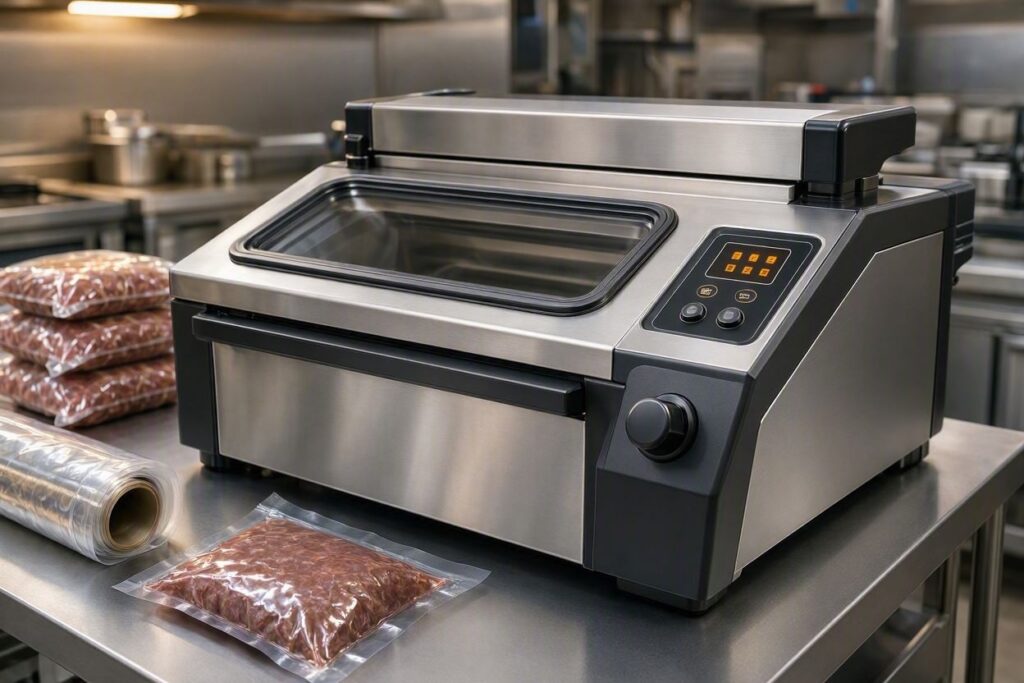
A suitable vacuum sealer can make packaging more organized and repeatable. Small businesses can use vacuum sealing for suitable meats, prepared foods, cheese, vegetables, coffee, dry products, and other items, depending on the machine and packaging material.
But buying the biggest machine is not always the right answer.
A small business needs equipment that matches its actual workload, available space, budget, and products.
Here is a simple step-by-step guide to choosing and using one.
1. Look at Your Current Packaging Process
Start with what you already do.
How do you package your products today?
Do you use ordinary bags?
Do employees seal products manually?
Do you prepare food in batches?
Do you package products only after receiving an order?
Write down the steps.
You may find several areas where vacuum sealing could save time.
2. Decide What You Want to Seal
Your products should guide your machine choice.
A small food business might package:
- Beef
- Chicken
- Fish
- Cheese
- Vegetables
- Prepared meals
- Coffee
- Dry ingredients
- Frozen foods
- Portion-controlled products
Make a list of your most common products.
Do not choose a machine before you understand what you actually need to package.
3. Calculate Your Daily Volume
Now estimate how many packages you seal.
Perhaps you currently seal 20 packages per day.
Maybe your busy days reach 60.
That number matters.
A machine designed for light use may not suit a business that expects heavy daily production.
At the same time, a large industrial machine may waste money and workspace if you only seal a few dozen packages.
Choose equipment around your real workload.
4. Think About Future Growth
Small businesses can grow quickly.
Maybe you currently process 30 packages a day.
What happens if orders double?
You do not need to buy equipment for a huge factory, but leave some room for reasonable growth.
Look for a machine that can handle your expected workload without becoming unnecessarily expensive.
5. Decide How Much Space You Have
Small businesses often have limited workspace.
This could be a small commercial kitchen, bakery, workshop, home-based production area, or shared kitchen.
Measure your available space.
Check the machine’s:
- Width
- Depth
- Height
- Lid clearance
- Working area
Remember that employees need room to operate the machine.
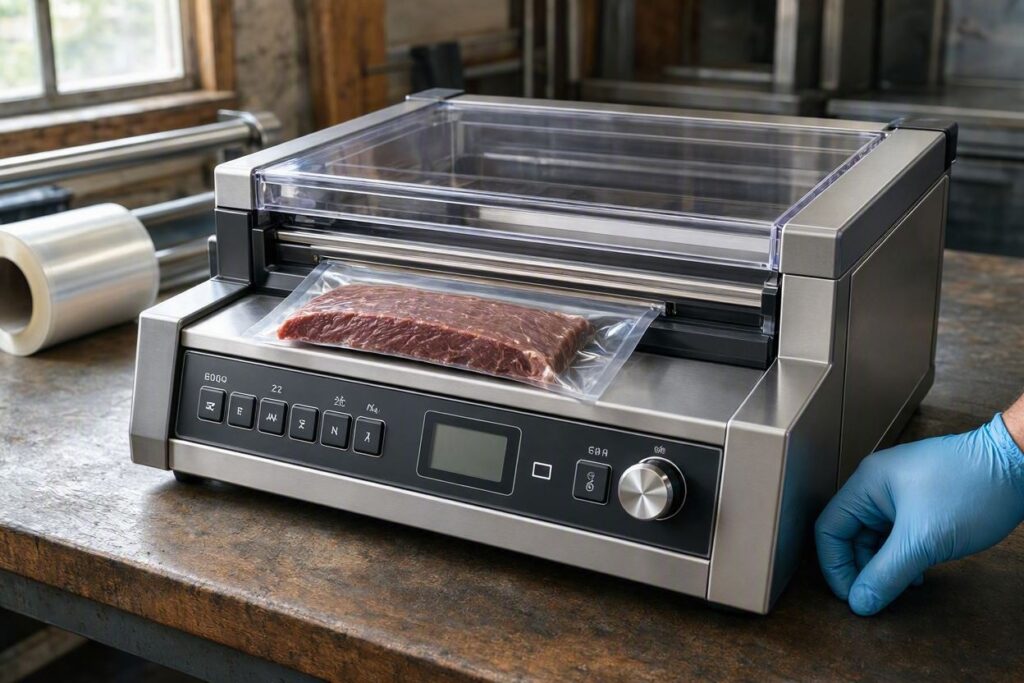
6. Consider a Chamber Vacuum Sealer
A chamber vacuum sealer places the bag inside the machine’s chamber.
The machine removes air from the chamber and bag before sealing.
This design can work well for many commercial food applications.
It can also be useful when packaging moist foods or liquid-containing products because the vacuum process differs from external suction systems.
For a small business, a chamber machine may provide useful flexibility if the product range includes wet foods.
7. Consider an External Vacuum Sealer
External suction machines keep the bag outside the machine.
The machine pulls air through the open end before sealing.
This type can suit certain small-business applications, especially when packaging appropriate dry products.
The bag requirements differ from many chamber systems.
Make sure you use bags designed for your particular machine.
8. Think About Moisture
Moisture changes the packaging process.
If you package marinated meat, sauces, or other wet products, liquid can move toward the bag opening during vacuuming.
That can interfere with sealing.
If your business regularly handles these products, compare chamber machines carefully.
Always follow the manufacturer’s instructions for the specific food and equipment.
9. Measure Your Largest Product
Do not guess your required machine size.
Take your largest normal product.
Measure its:
- Length
- Width
- Thickness
Then compare those measurements with the machine’s usable capacity.
For chamber models, check the actual chamber dimensions.
A machine may look large from the outside while offering less internal space than expected.
10. Check the Seal-Bar Length
The seal bar determines the maximum bag opening the machine can seal.
If you use wide bags, you need an appropriate seal-bar length.
If you mostly package small portions, you may not need a large sealing area.
Choose based on your actual bag sizes.
11. Look at the Pump
The pump affects vacuum performance.
Compare the manufacturer’s specifications.
Look for:
- Pump type
- Pump capacity
- Vacuum specification
- Cycle time
- Duty cycle
- Maintenance requirements
Avoid choosing a machine simply because the seller describes it as “powerful.”
Actual specifications tell you more.
Pump capacity also works together with chamber size, product size, bag type, and overall machine design. (pantrygearlab.com)
12. Check the Cycle Time
Small businesses still need speed.
Imagine sealing 100 packages before shipping an order.
A slow machine can eat into your working day.
Compare cycle times between machines that meet your other requirements.
But remember that speed is only useful when the machine also creates consistent seals.
13. Check the Duty Cycle
Duty cycle matters when you run the machine repeatedly.
Read the manufacturer’s operating recommendations.
Do not assume that a machine can operate nonstop simply because the product listing calls it commercial.
If the duty cycle is unclear, ask the supplier.
14. Choose the Right Bags
The bags can affect both cost and performance.
Chamber vacuum sealers commonly use smooth vacuum bags.
External suction machines often use textured or embossed bags that help air move through the bag toward the vacuum system. (pantrygearlab.com)
Check the manufacturer’s recommendations before ordering bags in bulk.
15. Compare Bag Costs
A small business needs to watch recurring expenses.
The machine may be a one-time purchase.
Bags are an ongoing cost.
Calculate how many bags you use each week.
Then estimate the monthly cost.
Also consider bag waste.
Cheap bags that tear frequently may cost more in the long run.
16. Pick Practical Bag Sizes
Do not use one giant bag for every product.
Choose sizes based on your normal portions.
A bag that fits the product properly can make the packaging process easier.
It can also reduce unnecessary material usage.
Create a few standard sizes for your most common products.
17. Prepare Products Before Sealing
Preparation matters.
Organize your products first.
Remove unnecessary wrapping.
Trim sharp edges where appropriate.
Be careful with bones, shells, or hard pieces that can puncture bags.
Use the correct portion size.
Do not overfill the bag.
18. Keep the Bag Opening Clean
This simple step makes a big difference.
Keep food away from the sealing area.
Do not let sauce, grease, crumbs, or excess moisture collect near the opening.
If the opening gets dirty, clean or replace the bag.
A clean sealing area helps you create a better closure.
19. Place the Bag Correctly
Follow the machine’s instructions.
Keep the bag opening flat.
Remove large wrinkles.
Make sure the product stays away from the sealing area.
Correct placement makes the process more consistent.
20. Choose the Vacuum Setting
Some machines allow you to adjust vacuum levels.
Use a setting that suits your product.
Do not always use the strongest possible vacuum.
Firm products may tolerate stronger vacuum pressure.
Delicate foods may need more care.
Test your products first.
21. Adjust the Seal Time
Seal time depends on the bag material and thickness.
Start with the manufacturer’s recommended setting.
Run a test package.
Inspect the seal.
If you change bag material or thickness, test the setting again.
22. Run Small Tests
Before processing a large order, test the machine.
Use your real products.
Use your real bags.
Run several cycles.
Check the finished packages.
Look for consistent vacuum and strong seals.
If you find a problem, fix it before starting full production.
23. Create a Standard Packaging Routine
Once you find settings that work, create a simple process.
For example:
Prepare → Portion → Bag → Vacuum → Seal → Inspect → Label → Store
Train everyone to follow the same order.
This can reduce mistakes and make training easier.
24. Use Portion Control
Small food businesses can benefit from consistent portions.
Instead of filling every bag differently, decide on standard quantities.
For example:
- 250 g portions
- 500 g portions
- 1 kg portions
Use the sizes that suit your business.
Then label each package clearly.
25. Make Inventory Easier
Vacuum-sealed packages can make stock organization simpler.
Label the products.
Group similar products together.
Use a consistent storage system.
Keep older suitable stock easy to identify and follow your normal stock-rotation practices.
Good organization saves time.
26. Label Every Package
Do not rely on memory.
Use labels according to your business requirements.
Depending on the product and applicable rules, labels may include:
- Product name
- Packaging date
- Batch number
- Storage information
- Use-by information
- Other required details
Clear labeling helps prevent confusion.
27. Store Food Correctly
Vacuum packaging does not replace refrigeration or freezing.
If the food needs refrigeration, refrigerate it.
If it needs freezing, freeze it.
Follow applicable food-safety requirements.
Do not assume that vacuum-sealed food can remain safely at room temperature simply because the package contains less air.
28. Keep the Work Area Organized
A small business may not have a huge kitchen.
That makes organization even more important.
Keep bags near the machine.
Keep labels nearby.
Store finished products in a clear system.
Avoid placing unrelated equipment around the vacuum sealer.
A clean workstation makes packaging faster.
29. Clean the Machine Regularly
Food equipment needs regular cleaning.
Follow the manufacturer’s cleaning instructions.
Pay attention to:
- Sealing area
- Chamber
- Gasket
- Food-contact surfaces
- Areas where moisture collects
Remove food residue promptly.
30. Inspect the Gasket
If your machine uses a chamber gasket, check it regularly.
Look for:
- Cracks
- Cuts
- Flattened sections
- Dirt
- Visible damage
A worn gasket can affect vacuum performance.
Replace it according to the manufacturer’s instructions.
31. Check the Sealing System
Inspect the sealing area regularly.
If packages suddenly look different, investigate.
Check:
- Bag position
- Bag material
- Seal settings
- Sealing components
Repeated seal problems need attention.
Do not simply continue production and hope the issue disappears.
32. Listen to the Machine
You will quickly learn how your machine normally sounds.
Pay attention if that changes.
A strange noise, unusual vibration, or longer cycle may indicate a problem.
Follow the manufacturer’s troubleshooting instructions.
33. Keep Spare Parts Available
Small businesses cannot always afford long downtime.
Ask the supplier which parts normally need replacement.
These may include:
- Gaskets
- Sealing components
- Pump parts
- Hinges
- Other service items
Parts availability can affect the machine’s long-term usefulness.
34. Check the Warranty
Read the warranty before buying.
Do not look only at the warranty length.
Find out what it covers.
Ask about major components.
Check how warranty repairs work.
Also ask whether the supplier offers technical support.
35. Think About Service
A small business may depend heavily on one machine.
If that machine stops working, packaging may stop too.
Ask the seller about:
- Repairs
- Spare parts
- Technical support
- Service centers
- Warranty claims
Reliable support can make ownership much easier.
36. Check Electrical Requirements
Before purchasing, check the electrical requirements.
Look at:
- Voltage
- Power
- Plug type
- Electrical load
Make sure your workspace can support the machine.
If you have doubts, ask the manufacturer or a qualified electrician.
37. Consider Noise and Heat
The machine will share your working area with employees.
If possible, check how much noise and heat it produces during operation.
This may not be your biggest concern, but it can affect the comfort of a small workspace.
38. Calculate the Total Investment
The machine price is not the complete cost.
Consider:
- Machine
- Bags
- Electricity
- Maintenance
- Replacement parts
- Repairs
- Cleaning supplies
- Employee time
This gives you a better idea of what the equipment will actually cost your business.
39. Do Not Buy Based Only on Price
A very cheap machine can look attractive.
But if it cannot keep up with your workload, it may become a problem.
On the other hand, the most expensive machine may provide capacity you do not need.
Look for the middle ground.
Buy equipment that fits your workload and product range.
40. Avoid Paying for Features You Will Never Use
More features do not always mean better value.
Ask yourself what your business actually needs.
If you only package a few standard products, you may not need every advanced control or extra-large chamber.
Simple equipment can be easier for employees to understand and maintain.
41. Test Before Buying
If you can test the machine, use it.
Do not test only an empty bag.
Use your actual product.
Use the actual bag material.
Try your largest regular package.
Run multiple cycles.
Check the final seals.
This practical test can reveal problems before you spend money.
42. Train Your Staff
Even a simple vacuum sealer needs proper operation.
Show employees how to:
- Prepare the product.
- Select the bag.
- Fill the bag.
- Keep the opening clean.
- Position the bag.
- Choose the settings.
- Start the cycle.
- Inspect the seal.
- Label the package.
- Store it correctly.
Keep the instructions simple.
43. Create a Settings Chart
If you package different products, record the tested settings.
For example:
Product: Chicken
Bag: Approved size
Vacuum: Tested setting
Seal: Tested setting
Create similar entries for other products.
This makes training easier and reduces guesswork.
44. Keep Track of Bag Usage
Record how many bags your business uses.
After a few weeks, you will know your average consumption.
That helps you order supplies before you run out.
It also helps you identify unusual waste.
45. Create a Maintenance Log
A simple maintenance log can help.
Record:
- Cleaning dates
- Gasket inspections
- Pump maintenance
- Replacement parts
- Repairs
Follow the manufacturer’s maintenance schedule.
46. Stop When Something Looks Wrong
Do not keep using the machine if it develops a serious problem.
Stop operation if you notice:
- Smoke
- Electrical problems
- Severe overheating
- Strange mechanical noises
- Sudden loss of vacuum
- Repeated seal failures
- Visible damage
Follow the manufacturer’s safety instructions.
Do not attempt repairs beyond your training.
Is a Commercial Vacuum Sealer Worth It for a Small Business?
It can be, especially when packaging has become a regular part of daily production.
The machine can help organize packaging and portioning.
It can also make repetitive sealing tasks easier.
But the value depends on how much you use it.
If you only seal a few packages each month, a commercial machine may not make financial sense.
If you package products every day, the calculation can look very different.
Best Small-Business Applications
A suitable commercial vacuum sealer can work well for businesses such as:
- Small butcher shops
- Meal-prep businesses
- Catering companies
- Small restaurants
- Food producers
- Specialty food sellers
- Coffee businesses
- Farmers’ market vendors
- Prepared-food businesses
The exact machine should match the products and workload.
A Simple Buying Checklist
Before purchasing your machine, answer these questions:
- What products will I package?
- How many packages do I seal each day?
- What is my largest package?
- Do I package wet foods?
- Do I need a chamber machine?
- What bags will I use?
- What seal-bar length do I need?
- What pump specifications should I look for?
- What cycle time can handle my workload?
- What duty cycle does the machine support?
- How much counter space do I have?
- What are the electrical requirements?
- How easy is cleaning?
- What maintenance does it require?
- Are replacement parts available?
- What does the warranty cover?
- Is technical support available?
- What will bags and maintenance cost each month?
Once you have these answers, comparing machines becomes much easier.
A commercial vacuum sealer for small business does not need to be the biggest or most expensive machine on the market.
It needs to fit your work.
Start with your products.
Then calculate your daily packaging volume. Measure your largest bags and products. Decide whether a chamber or external suction design fits your operation.
If you handle moist foods, sauces, or marinades, pay particular attention to chamber vacuum options and the manufacturer’s instructions.
After that, compare pump specifications, chamber size, seal-bar length, cycle time, duty cycle, bag compatibility, cleaning, maintenance, warranty, and service support.
Do not forget the ongoing costs.
Bags, electricity, replacement parts, repairs, and employee time all affect the real value of the equipment.
Once you buy the machine, keep the process simple.
Prepare → Portion → Bag → Vacuum → Seal → Inspect → Label → Store
Train employees to use the same process.
Keep the machine clean.
Check seals regularly.
Maintain the equipment according to the manufacturer’s instructions.
And follow proper food-storage and food-safety requirements for the products you handle.
For a growing small business, the right vacuum sealer can become more than a packaging machine. It can become part of a smoother daily workflow.
The best choice is the one that handles your current workload, gives you some room to grow, fits your workspace, works with your packaging, and does not create unnecessary operating costs.
Content Disclaimer: Content on Vacuum Seal HQ is provided for general informational and educational purposes only. While we aim to provide accurate and up-to-date information, errors or omissions may occur. Always check product instructions, manufacturer guidance and other appropriate sources before relying on the information provided.