Food packaging looks simple until you have to do it all day.
One bag is easy. Ten bags are still manageable. But when a restaurant, butcher shop, catering business, meal-prep company, or food operation needs to seal dozens or hundreds of packages every day, the process can become slow and tiring.
Disclosure: As an Amazon Associate I earn from qualifying purchases. Read our Amazon Affiliate Disclosure for more information.
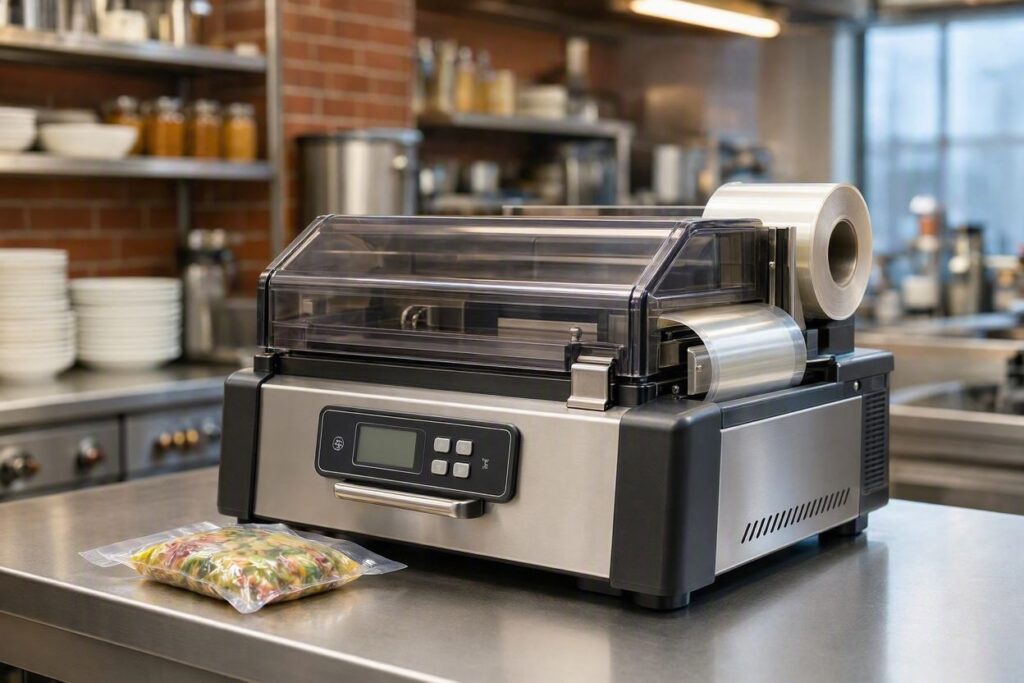
A commercial vacuum sealer for food can make that job much easier.
It removes air from suitable food packages and creates a sealed pouch that can help with organized storage and packaging. But choosing the right machine takes some thought. Not every vacuum sealer suits every type of food, bag, or workload.
Some machines work better for small batches. Others can handle repeated commercial use. Some models suit dry foods, while chamber machines can work particularly well for many moist foods and liquid-containing products.
So, how do you choose one?
Let’s go through it step by step.
1. Start With Your Food Business
Before looking at machines, look at your daily work.
Ask yourself a few basic questions.
What foods do you package?
How many packages do you seal each day?
What size bags do you normally use?
Do your products contain liquids?
Do you package fresh food, frozen food, prepared meals, or dry ingredients?
Write down the answers.
These details will help you narrow down your options much faster.
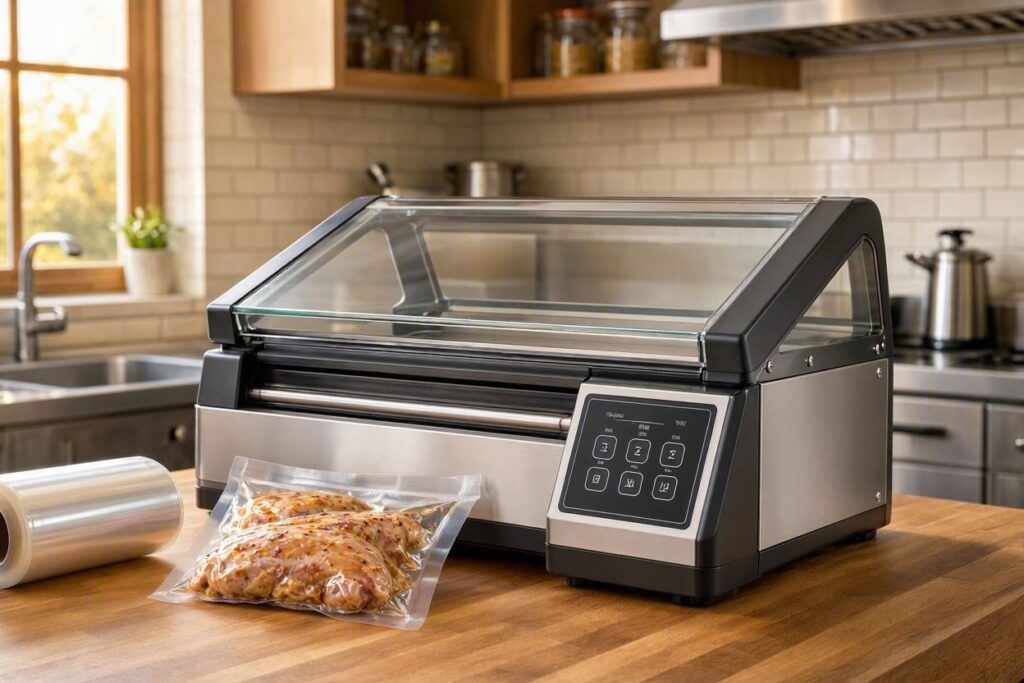
2. Make a List of Your Regular Foods
A commercial kitchen may package many different foods.
For example:
- Beef
- Chicken
- Fish
- Cheese
- Vegetables
- Prepared meals
- Frozen food
- Coffee
- Dry ingredients
- Marinated meat
- Sauces
Different products can require different packaging approaches.
A firm piece of meat does not behave like a bag of liquid.
A delicate food also needs different handling from a dense product.
Start with the foods you package most often.
3. Count Your Daily Packages
Now calculate your workload.
Suppose you seal 40 packages on a normal day.
That is one requirement.
Now imagine your business grows and you start sealing 200 packages each day.
Your equipment requirements change.
A small household machine may work for occasional use, but commercial operations often need equipment designed for repeated cycles.
Check the manufacturer’s duty-cycle information before making a decision.
4. Choose Between External and Chamber Vacuum Sealers
This is one of the first major decisions.
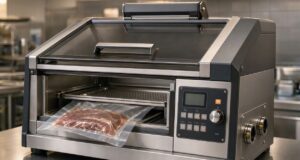
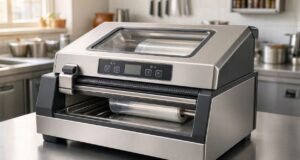
An external vacuum sealer keeps the bag outside the machine. The machine pulls air through the opening and then seals the bag.
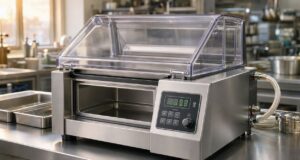
A chamber vacuum sealer places the bag inside the chamber. The machine removes air from the chamber and bag before sealing.
Chamber machines can work well for many commercial food applications, especially when the business packages liquids, sauces, or other moist foods.
External models can make sense for certain smaller operations and suitable dry products.
5. Think About Wet Foods
Wet food needs extra attention.
Imagine trying to vacuum seal a bag containing marinade.
As the machine removes air, the liquid can move toward the opening.
That can make sealing difficult.
Chamber vacuum machines can offer an advantage for many liquid-containing applications because the machine creates the vacuum inside the chamber rather than simply pulling air directly from the bag opening.
Still, always follow the manufacturer’s instructions and appropriate food-handling practices.
6. Measure Your Food Containers and Bags
Do not guess the required size.
Take your largest normal product.
Measure it.
Then measure the bag you plan to use.
If you are considering a chamber machine, compare those measurements with the usable chamber space.
Check:
- Chamber width
- Chamber length
- Chamber height
- Seal-bar length
The machine needs enough room for the food and bag.
7. Check the Seal Bar
The sealing bar creates the final closure.
Its length affects the width of the bag you can seal.
If your food business uses large bags, make sure the seal bar can handle them.
If you mainly use small pouches, you may not need a very large sealing area.
Choose based on your packaging sizes.
8. Look at the Vacuum Pump
The pump does much of the heavy work.
When comparing machines, look at the manufacturer’s specifications.
Check:
- Pump type
- Pump capacity
- Vacuum specification
- Cycle time
- Duty cycle
- Maintenance requirements
Do not judge the pump by marketing language alone.
A machine advertised as “powerful” may not suit your workload.
Actual specifications provide more useful information.
9. Consider Pump Maintenance
Commercial equipment needs maintenance.
Some machines use oil-lubricated pumps.
Others use dry pumps.
Oil-lubricated pumps can suit demanding applications but require proper oil maintenance.
Dry pumps do not require pump oil.
Neither option automatically makes one machine right for every business.
Consider your workload and how much maintenance your staff can handle.
10. Check Cycle Time
Cycle time matters when you package food in large quantities.
Imagine sealing 250 bags.
A few extra seconds per package can add up over a working day.
Look for a machine that can provide the cycle speed your operation needs without sacrificing seal quality.
Fast packaging is useful.
Consistent packaging is even more important.
11. Check the Duty Cycle
Duty cycle tells you how much repeated work the machine can handle.
This becomes especially important in a busy food operation.
Do not assume that a machine can run continuously just because it looks large.
Read the manufacturer’s operating recommendations.
If the information is unclear, ask the supplier.
12. Choose the Correct Vacuum Bags
The bags matter just as much as the machine.
Chamber vacuum sealers commonly use smooth vacuum bags.
External suction machines often use textured or embossed bags that allow air to move through the bag toward the vacuum channel.
Check the manufacturer’s recommended packaging material.
Look at:
- Bag thickness
- Bag width
- Bag length
- Material
- Seal compatibility
Never buy thousands of bags before checking whether they work with your machine.
13. Leave Enough Space at the Bag Opening
This small detail can prevent problems.
Do not fill the bag right to the top.
Leave enough space for the machine to create a proper seal.
Keep food away from the sealing area.
Sauce, oil, crumbs, and moisture can interfere with the seal.
A clean bag opening gives you a much better starting point.
14. Prepare Food Before Packaging
Prepare the food properly.
Remove unnecessary wrapping.
Trim sharp edges where appropriate.
Watch out for bones, shells, and hard pieces that could puncture the bag.
Choose the right bag size.
Avoid overfilling.
A little preparation can save a lot of wasted bags later.
15. Position the Bag Correctly
Place the bag according to the machine’s instructions.
Keep the opening flat.
Smooth out major wrinkles.
Make sure the food does not interfere with the sealing area.
Correct positioning helps the machine create more consistent packages.
16. Select the Vacuum Setting
Some commercial vacuum sealers allow you to adjust the vacuum level.
Use the setting appropriate for the product.
Do not automatically select the strongest possible setting.
Firm foods may tolerate stronger vacuum pressure.
Delicate foods may require a gentler approach.
Run a test package first.
17. Set the Sealing Time
The correct sealing time depends on the bag material and thickness.
Start with the manufacturer’s recommended setting.
Run a test.
Inspect the seal.
If you change to a different bag material, test the new setting again.
Do not assume that one setting works perfectly for every bag.
18. Run a Test Package
Before starting a large production run, test the machine.
Use one of your actual products.
Use the same bag you plan to use during production.
Run the cycle.
Then inspect the result.
Check the vacuum.
Check the seal.
Check the appearance of the bag.
If everything looks good, continue.
19. Inspect Every Package
Do not send a package directly into storage without checking it.
Look for:
- Weak seals
- Open areas
- Wrinkles
- Burn marks
- Punctures
- Air pockets
- Food trapped in the seal
If you see repeated problems, stop the process.
Check the machine settings and packaging material.
20. Label the Food
After sealing, label the package according to your business procedures and applicable requirements.
Labels may include:
- Food name
- Packaging date
- Batch number
- Storage information
- Use-by information
- Other required details
Good labels make inventory management easier.
21. Store Food at the Correct Temperature
Vacuum packaging does not replace proper food storage.
If the food needs refrigeration, refrigerate it.
If it needs freezing, freeze it.
Follow applicable food-safety requirements for the products you handle.
Do not assume that removing air makes perishable food safe at room temperature.
22. Keep the Work Area Clean
Vacuum packaging works best in an organized workspace.
Keep bags in a clean location.
Keep food preparation areas clean.
Remove spills quickly.
Clean the machine according to its manufacturer’s instructions.
A clean work area also makes it easier for employees to notice problems.
23. Clean the Sealing Area
Pay special attention to the sealing area.
Food residue can collect around the machine.
Moisture and grease can also cause problems.
Clean the area regularly.
Follow the manufacturer’s cleaning instructions.
Do not use cleaning products that can damage machine components.
24. Inspect the Gasket
Chamber vacuum machines use a lid gasket to help maintain the chamber seal.
Inspect it regularly.
Look for:
- Cracks
- Cuts
- Flattened sections
- Dirt
- Other visible damage
If the gasket shows signs of wear, follow the manufacturer’s instructions for replacement.
25. Watch the Machine During Operation
Employees should learn how the machine normally sounds and operates.
That makes unusual behavior easier to notice.
Pay attention to:
- Strange noises
- Unusual vibration
- Longer cycles
- Inconsistent vacuum
- Poor seals
- Overheating
If something changes suddenly, stop and investigate according to the manufacturer’s troubleshooting instructions.
26. Keep Replacement Parts in Mind
Before purchasing a machine, ask about replacement parts.
Find out whether the supplier can provide items such as:
- Gaskets
- Sealing components
- Pump parts
- Hinges
- Other service components
Parts availability can make a big difference when you depend on the machine every day.
27. Check the Warranty
Read the warranty carefully.
Do not look only at the number of years.
Check what the manufacturer actually covers.
Ask about major components.
Also find out how warranty repairs work.
A good warranty can provide useful protection, but you should understand its terms before purchasing.
28. Think About After-Sales Support
Imagine your machine stops working during a busy weekend.
Who will help you?
Ask the supplier about:
- Technical support
- Repairs
- Spare parts
- Service centers
- Warranty claims
Reliable support can save your business time when something goes wrong.
29. Measure Your Available Space
Commercial food equipment can take up a lot of room.
Measure your workspace before buying.
Do not forget to leave room for employees.
They need space to load bags and remove finished packages.
They also need room to clean the machine.
30. Check Electrical Requirements
Look at the machine’s electrical specifications.
Check:
- Voltage
- Power requirements
- Plug type
- Electrical load
Make sure the machine matches your workplace’s electrical supply.
If you are unsure, ask the manufacturer or a qualified electrician.
31. Train Your Employees
Do not let every employee develop their own packaging method.
Create one simple process.
For example:
- Prepare the food.
- Select the correct bag.
- Fill the bag.
- Keep the opening clean.
- Position the bag.
- Select the vacuum setting.
- Select the sealing setting.
- Start the machine.
- Inspect the package.
- Label and store the food.
A simple process makes training much easier.
32. Record Your Best Settings
If you package several types of food, keep a settings sheet.
For example:
Product: Chicken portions
Bag: Approved size
Vacuum: Tested setting
Seal: Tested setting
Create similar records for your other products.
This prevents employees from guessing.
33. Compare the Total Cost
Do not compare machines based only on purchase price.
Consider:
- Machine cost
- Bag cost
- Electricity
- Maintenance
- Replacement parts
- Repairs
- Employee time
- Downtime
A cheaper machine may cost more over time if it needs frequent repairs or slows down production.
34. Do Not Buy More Capacity Than You Need
Bigger is not always better.
A large industrial chamber may make sense for a food-processing facility.
A smaller commercial chamber may work perfectly well in a restaurant.
Choose equipment according to your workload.
You can always upgrade later as the business grows.
35. Avoid Marketing Claims
Product pages often use words such as:
- Professional
- Commercial
- Industrial
- Heavy duty
- High performance
- Premium
These words sound good, but they do not tell you everything.
Look at the specifications instead.
Compare pump details, chamber dimensions, seal-bar length, duty cycle, cycle time, bag compatibility, and warranty.
36. Test Different Product Types
If the supplier allows testing, try several foods.
Test a dry product.
Test a moist product.
Test your largest normal package.
Try the actual bags you plan to use.
Run several cycles.
Then inspect the results.
This gives you a better idea of whether the machine fits your business.
37. Create a Daily Cleaning Routine
Make cleaning part of the normal workflow.
At the end of the working period:
- Remove food residue.
- Clean the appropriate surfaces.
- Inspect the sealing area.
- Check the gasket where applicable.
- Look for visible damage.
- Leave the machine ready for the next shift.
Follow the manufacturer’s cleaning instructions for the exact machine.
38. Create a Maintenance Schedule
Do not wait until the machine stops working.
Follow the manufacturer’s maintenance schedule.
Depending on the machine, maintenance may include checking seals, gaskets, pump components, or other service parts.
Keep a simple record.
Write down the date of each maintenance task.
39. Know When to Stop Using the Machine
Do not ignore serious problems.
Stop using the equipment if you notice:
- Electrical issues
- Smoke
- Severe overheating
- Strange mechanical sounds
- Repeated seal failures
- Sudden loss of vacuum
- Visible damage
Follow the manufacturer’s troubleshooting and service instructions.
Do not attempt repairs beyond your training.
40. Build a Simple Food Packaging Workflow
A good workflow can save time.
Try to organize the process like this:
Prepare → Bag → Position → Vacuum → Seal → Inspect → Label → Store
Keep bags close to the workstation.
Keep labels organized.
Train employees to follow the same order.
This can reduce unnecessary movement and confusion.
What Foods Work Well With Commercial Vacuum Sealing?
Commercial vacuum sealing can suit many food-packaging applications.
Businesses may use it for:
- Meat
- Seafood
- Cheese
- Vegetables
- Prepared meals
- Dry foods
- Frozen foods
- Portion-controlled ingredients
The machine and packaging material must match the food and intended application.
Why Businesses Use Commercial Vacuum Sealers
A commercial vacuum sealer can help businesses create a more organized packaging process.
It can help with portion packaging.
It can make storage more orderly.
It can also make products easier to label and handle.
For businesses that package food every day, having the right equipment can save time compared with handling every package manually.
Final Buying Checklist
Before buying a commercial vacuum sealer for food, go through this list:
- What foods will I package?
- How many packages do I seal daily?
- Do I package liquids?
- What is my largest product?
- What bag sizes do I use?
- Do I need a chamber machine?
- What seal-bar length do I need?
- What pump does the machine use?
- What is its cycle time?
- What is its duty cycle?
- What bags does it support?
- How easy is it to clean?
- What maintenance does it require?
- Are replacement parts available?
- What does the warranty cover?
- Is technical support available?
- Does the machine fit my workspace?
- Does my electrical supply support it?
- What will it cost to operate over several years?
These questions can make the buying process much easier.
The right commercial vacuum sealer for food should fit the way your business actually works.
Start with your products and workload.
Then decide which machine style makes sense. If you package many moist foods or liquids, look closely at chamber vacuum sealers. If you mainly package suitable dry products in smaller quantities, another design may meet your needs.
After that, compare chamber size, seal-bar length, pump specifications, cycle time, duty cycle, bag compatibility, maintenance, warranty, and service support.
Do not focus only on the machine’s price.
Think about bags, maintenance, employee time, and possible downtime too.
Most importantly, test the machine with your own products whenever possible.
Once you find the right equipment, keep the process simple. Train employees, keep the sealing area clean, inspect finished packages, maintain the machine, and follow proper food-storage and food-safety practices.
A good commercial vacuum sealer should become a useful part of your daily food operation. It should handle your workload, work with your packaging, and make the sealing process easier to manage.
Choose the machine according to the job you actually need it to do. That approach will usually serve your business much better than simply buying the machine with the biggest price tag or the most impressive description.
Content Disclaimer: Content on Vacuum Seal HQ is provided for general informational and educational purposes only. While we aim to provide accurate and up-to-date information, errors or omissions may occur. Always check product instructions, manufacturer guidance and other appropriate sources before relying on the information provided.