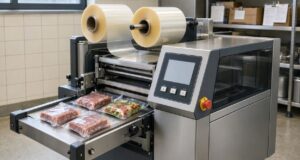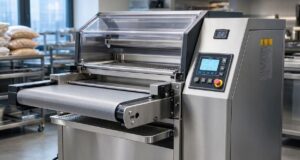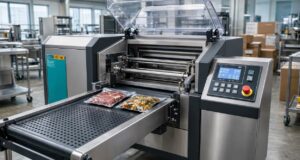
An industrial vacuum sealer can make a big difference in a busy production environment. When a business needs to package a large number of products every day, a small household vacuum sealer may not provide enough capacity or durability.
Industrial vacuum sealing equipment helps businesses remove air from suitable packaging and create a tight seal. Food processors, meat companies, commercial kitchens, catering operations, and other packaging businesses may use this type of equipment as part of their daily workflow.
Disclosure: As an Amazon Associate I earn from qualifying purchases. Read our Amazon Affiliate Disclosure for more information.
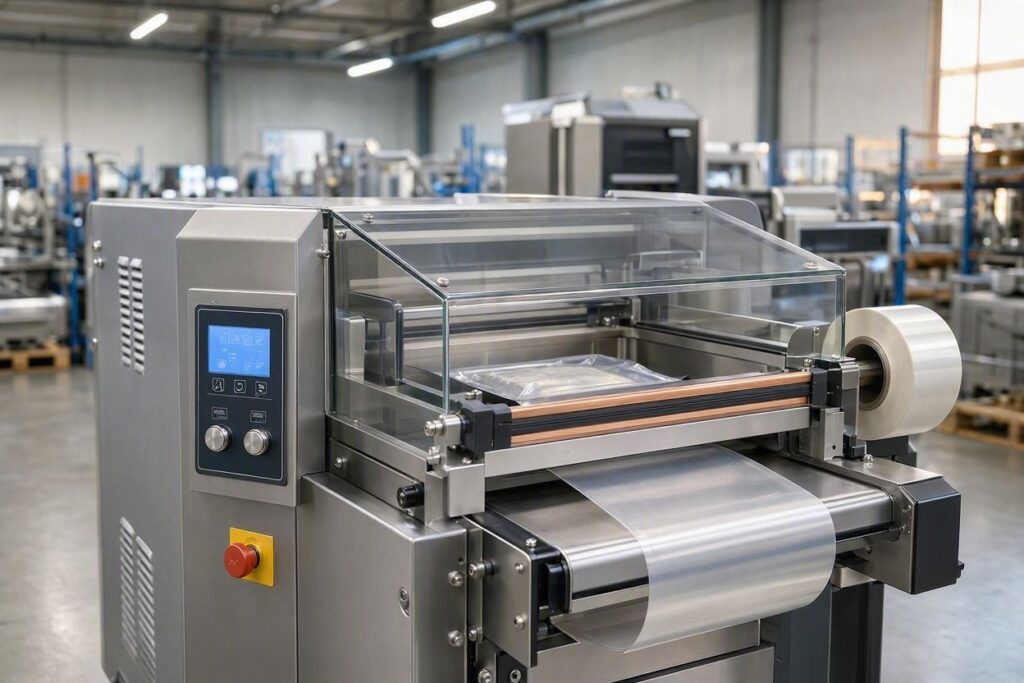
The machine itself does not make the process complicated. The challenge comes from choosing the right equipment, setting it up correctly, and using a consistent packaging method.
This guide explains how an industrial vacuum sealer works, what to consider before buying one, how to use it step by step, and how to keep it in good working condition.
What Is an Industrial Vacuum Sealer?
An industrial vacuum sealer removes air from a suitable package and seals the opening.
Industrial machines generally target higher workloads than ordinary household models. Depending on the design, they may offer larger chambers, stronger vacuum systems, wider sealing bars, heavier construction, and controls designed for repeated operation.
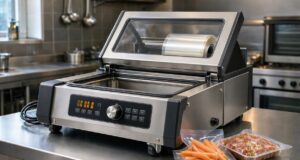
Some machines use a chamber system.
Others use an external sealing system.
Your choice depends on your products, packaging volume, bag sizes, and available workspace.
Why Do Businesses Use Industrial Vacuum Sealing?
Air exposure can affect the quality of many packaged products.
Vacuum packaging reduces the amount of air around the product and can help protect certain foods from freezer burn and oxidation.
Businesses may use vacuum sealing to:
- Organize products for storage
- Reduce air inside suitable packages
- Protect products during storage
- Improve package appearance
- Prepare products for transportation
- Create consistent packaging
- Handle large packaging workloads
Vacuum sealing does not replace proper food handling, refrigeration, freezing, sanitation, or other food-safety practices.
Step 1: Identify Your Products
Start by making a list of everything you plan to package.
You may package:
- Meat
- Fish
- Cheese
- Vegetables
- Prepared meals
- Dry products
- Other suitable food products
The product type affects your choice of machine and packaging material.
If you package liquids or foods with sauces, a chamber machine may offer practical advantages over many external models.
Step 2: Calculate Your Daily Workload
Next, estimate how many packages you need to seal each day.
Do not rely on a rough guess.
Look at your normal production volume.
If you package only a few dozen bags, you may not need the largest industrial model.
If your operation handles hundreds or thousands of packages, you need equipment designed for that level of use.
Check the manufacturer’s rated operating capacity and duty cycle before making a purchase.
Step 3: Choose the Right Machine Design
Industrial vacuum sealers come in different designs.
Chamber Vacuum Sealer
A chamber machine places the complete bag inside a sealed chamber.
The machine removes air from the chamber and package before sealing the bag.
This design can work well for many commercial applications.
It can also suit certain liquid-containing products when you follow the machine’s operating instructions.
External Vacuum Sealer
An external model keeps the bag outside the machine.
The machine removes air through the bag opening and then creates the seal.
This design may suit smaller operations or specific packaging jobs.
Compare both options carefully before choosing.
Step 4: Measure Your Products
Measure the largest products you regularly package.
Then compare those measurements with the machine’s chamber and sealing dimensions.
Do not choose a machine based only on average product size.
Think about the largest bag you expect to use.
You need enough space to position the package correctly without forcing it into the machine.
Step 5: Check the Sealing Bar Width
The sealing bar determines the maximum sealing width available on many machines.
A wider sealing bar gives you more flexibility with larger bags.
If you mostly package small portions, you may not need an extra-wide sealing bar.
Choose according to your actual packaging requirements.
Step 6: Select the Correct Vacuum Bags
The bag plays an important role in the sealing process.
Use bags that match the machine and packaging application.
Check the manufacturer’s recommendations.
Choose an appropriate thickness for your products.
Sharp bones or hard edges can puncture a bag, so prepare products carefully.
Do not overfill the bag.
Leave enough space at the opening for a clean seal.
Step 7: Prepare the Product
Before vacuum sealing, prepare the product properly.
Remove unnecessary packaging.
Trim or protect sharp edges where appropriate.
Keep the product clean.
If you package food, maintain appropriate temperature control during preparation and handling.
Keep liquids and food particles away from the sealing area.
A clean sealing area helps create a stronger, more consistent seal.
Step 8: Fill the Bag
Place the product inside the vacuum bag.
Do not pack the bag so tightly that the machine cannot close or seal it properly.
Leave sufficient space around the product.
Keep the open end clean.
If sauce, oil, or moisture reaches the sealing area, clean it before starting the vacuum cycle.
Step 9: Position the Bag Correctly
Position the open end according to your machine’s instructions.
Keep the opening flat.
Remove unnecessary folds and wrinkles.
Make sure the bag does not interfere with the chamber lid or sealing mechanism.
Correct positioning helps the machine create a consistent package.
Step 10: Set the Vacuum Level or Time
Many industrial vacuum sealers allow operators to adjust vacuum settings.
The correct setting depends on the machine and product.
A delicate product may require a different approach from a firm product.
Start with the manufacturer’s recommended settings.
Test several packages before running a large production batch.
Step 11: Set the Sealing Time
The sealing time affects the quality of the final package.
If you use too little sealing time, the package may develop a weak seal.
If you use excessive heat or time, you may damage the packaging material.
Use the recommended settings for your particular bag.
When you change bag material or thickness, check whether you need to adjust the sealing settings.
Step 12: Start the Vacuum Cycle
Place everything correctly and start the cycle.
The machine will remove air according to the programmed settings.
Keep the chamber closed during operation if your machine requires it.
Do not reach into the chamber while the machine runs.
Allow the cycle to finish normally.
Step 13: Inspect the Seal
Once the cycle finishes, remove the package.
Inspect the seal carefully.
Look for:
- Open sections
- Wrinkles
- Burn marks
- Weak spots
- Punctures
- Food or liquid trapped in the seal
If the package does not look right, find the cause before continuing production.
Small adjustments can often improve consistency.
Step 14: Label the Package
After sealing, label the package according to your business requirements and applicable regulations.
Depending on the product, labels may include:
- Product name
- Packaging date
- Batch number
- Storage information
- Use-by information
- Other required details
Good labeling makes inventory management much easier.
Step 15: Store the Product Properly
Move the sealed product into the correct storage environment.
Keep refrigerated products refrigerated.
Freeze products that require freezing.
Follow applicable food-safety requirements for the product and your location.
Vacuum packaging does not make perishable food safe to store at room temperature.
Industrial Vacuum Sealer Features to Compare
Choosing an industrial machine requires more than comparing prices.
Vacuum Pump
Check the manufacturer’s vacuum pump specifications and expected cycle performance.
A business with a high workload should choose equipment designed for frequent operation.
Sealing Width
Look at the maximum sealing width.
Make sure it fits your packaging sizes.
Chamber Dimensions
If you choose a chamber machine, check the internal dimensions carefully.
Construction
Industrial equipment should suit the environment where you plan to use it.
Stainless-steel construction can make cleaning and routine care easier in many commercial settings.
Control System
Look for controls that let operators adjust the vacuum and sealing process when needed.
Simple controls can also reduce training time.
Maintenance Access
Check how easily operators can clean the sealing area and other user-serviceable components.
Common Uses for Industrial Vacuum Sealers
An industrial vacuum sealer can support many types of operations.
Food Processing
Food processors can use vacuum packaging as part of their production workflow.
Meat Packaging
Meat businesses can package suitable cuts and portions for storage or sale.
Seafood
Seafood businesses may use vacuum packaging for appropriate products while following food-safety requirements.
Commercial Kitchens
Large kitchens can package prepared ingredients and portions for organized storage.
Catering
Catering companies can use vacuum sealing as part of their preparation and storage process.
Common Industrial Vacuum Sealer Problems
Weak Seals
Check the bag for food, moisture, or wrinkles around the sealing area.
Also check the sealing settings.
Air Remains in the Package
Inspect the bag for punctures.
Check the vacuum settings and bag position.
The Package Loses Vacuum
Look for leaks or damaged packaging.
Inspect the complete seal rather than checking only one section.
Bag Damage
Sharp product edges can puncture packaging.
Prepare the product carefully and select suitable packaging material.
Slow Vacuum Cycles
Check the manufacturer’s troubleshooting information.
Inspect user-serviceable areas such as the gasket, hoses, or connections when applicable.
Do not open internal components unless the manufacturer permits user servicing or you have the required technical expertise.
How to Maintain an Industrial Vacuum Sealer
Regular maintenance matters when a machine handles heavy workloads.
Clean the sealing area regularly.
Remove food particles and packaging debris.
Clean the chamber according to the manufacturer’s instructions.
Inspect the chamber gasket if your machine uses one.
Check the sealing bar.
Inspect vacuum hoses and connections where applicable.
Keep the machine’s exterior clean.
Follow the manufacturer’s maintenance schedule.
If the machine suddenly develops unusual noise, vibration, overheating, or reduced vacuum performance, stop using it and investigate the issue according to the manufacturer’s guidance.
Safety Tips for Industrial Vacuum Sealing
Always train operators before they use the machine.
Read the owner’s manual.
Keep hands away from moving components.
Do not bypass safety features.
Use the correct packaging materials.
Keep electrical components away from water.
Clean spills promptly.
Turn off and disconnect the machine before performing maintenance that requires access near moving or electrical components.
Wear appropriate protective equipment for your workplace and product-handling process.
Industrial Vacuum Sealer vs. Commercial Vacuum Sealer
The terms can overlap because manufacturers use different names for their machines.
In general, an industrial model targets heavier production environments.
A commercial model may suit restaurants, catering operations, butcher shops, and smaller food businesses.
The most important thing is not the label.
Look at the machine’s actual specifications.
Check its recommended workload, sealing width, chamber size, pump performance, construction, and maintenance requirements.
Tips for Improving Packaging Efficiency
A consistent workflow can save a lot of time.
Keep bags organized by size.
Prepare products before the machine becomes available.
Train employees to use the same basic process.
Check settings before starting a large batch.
Inspect the first few packages from every new batch.
Keep the sealing area clean.
Maintain the machine on schedule.
These simple habits can reduce unnecessary delays.
An industrial vacuum sealer can handle demanding packaging work when you choose the right machine and use it correctly.
Start by identifying your products and calculating your daily workload. Then compare machine designs, chamber dimensions, sealing width, vacuum performance, controls, and construction.
Once you install the machine, create a simple and consistent workflow. Prepare the product, choose a suitable vacuum bag, position it correctly, set the vacuum and sealing controls, and inspect every finished package.
Do not forget maintenance. Clean the machine regularly, inspect the sealing components, check the vacuum system, and follow the manufacturer’s service instructions.
Most importantly, treat vacuum sealing as one part of the overall packaging process. For food businesses, continue to follow proper sanitation, refrigeration, freezing, labeling, and food-safety practices.
With the right equipment and a good routine, an industrial vacuum sealer can make high-volume packaging faster, more organized, and easier to manage.
Content Disclaimer: Content on Vacuum Seal HQ is provided for general informational and educational purposes only. While we aim to provide accurate and up-to-date information, errors or omissions may occur. Always check product instructions, manufacturer guidance and other appropriate sources before relying on the information provided.